

Difficult Venous Access Clinic: Blood Tests for Hard-to-Find Veins
Ultrasound-guided blood collection with Dr Louis Traynor in Sutherland. No referral needed.
- No referral needed
- Led by Dr Louis Traynor (FACEM)
- Ultrasound-guided collection
- Teens & adults
- AGPAL-accredited practice
About the Clinic
For some people, a routine blood test is anything but routine. The vein can’t be seen or felt, the first attempt misses, then the second, and you leave bruised and still without a sample. Many of these patients are not anxious about needles at all. Their veins are simply hard to reach.
The Difficult Venous Access Clinic at Shire Family Medical in Sutherland is a dedicated blood collection appointment for exactly this situation. It is run only by Dr Louis Traynor, a Specialist Emergency Physician skilled in ultrasound-guided vascular access. Using a small handheld ultrasound probe, Dr Traynor can locate a suitable vein beneath the skin before the needle goes in, which can reduce the need for repeated attempts.
You don’t need a referral, and you don’t need to be an existing Shire Family Medical patient. Call to book, then bring the pathology request form from the doctor who ordered your tests.
What is difficult venous access?
“Difficult venous access” is the medical term for veins that are hard to find or hard to collect blood from. It usually means the veins can’t easily be seen or felt, or that previous blood tests or drips needed more than one attempt. It is common, and it is not your fault.
Who This Clinic Helps
This clinic may suit infants (under 18 months), teenagers and adults who have had trouble with blood collection for any of the following reasons:
Repeated Failed Attempts
Blood tests that regularly take two or more attempts, or end without a sample.
Told You Have "Difficult Veins"
Collectors, nurses or hospital staff have mentioned your veins are hard to find.
Small, Deep or Rolling Veins
Veins that sit deeper under the skin, are very fine, or move away from the needle.
Needed Ultrasound Before
You have previously needed ultrasound, or a specialist team, to find a vein in hospital.
Frequent Blood Tests
Ongoing monitoring for a health condition, where veins may have become harder to access over time.
Want Fewer Attempts
You would rather plan ahead than face multiple attempts at a standard collection centre.
This clinic is the right fit if...
- You're a teenager or adult
- The main problem is finding a vein
- You're comfortable with needles
- You already have a pathology request form
The BRAVE Clinic may suit you better if...
- Anxiety or needle phobia is part of the difficulty
- The blood test is for a child between 18 months and 12 years
- The patient is neurodivergent or has an intellectual disability
- A past blood test was traumatic
Understanding Difficult Veins
There is rarely a single cause. Veins can be harder to access for many everyday reasons, and these can change from one day to the next. Common factors may include:
- Naturally small or deep veins. Some people simply have veins that sit further below the skin or are finer than average.
- Dehydration or feeling cold. Veins can narrow when you haven't had enough fluid or your hands and arms are cold.
- Frequent previous blood tests, drips or infusions. Repeated access in the same areas can sometimes leave veins scarred or harder to use.
- Body composition. Veins can be harder to see or feel through more tissue under the skin.
- Some medical conditions and treatments. Certain long-term conditions, and treatments such as chemotherapy, can affect veins.
- Age. Veins in older adults can be more fragile or more likely to move.
If you are not sure why your blood tests are difficult, Dr Traynor can talk this through with you at your appointment.
The Technique
In a standard blood test, the collector finds a vein by sight and touch. When a vein can’t be seen or felt, that becomes educated guesswork. Ultrasound removes much of the guessing.
Dr Traynor places a small ultrasound probe, with a little gel, on the skin of your arm. The screen shows the veins underneath in real time, including their size and depth. He can then choose the most suitable vein and guide the needle to it while watching the screen. The needle itself is the same type used for an ordinary blood test.
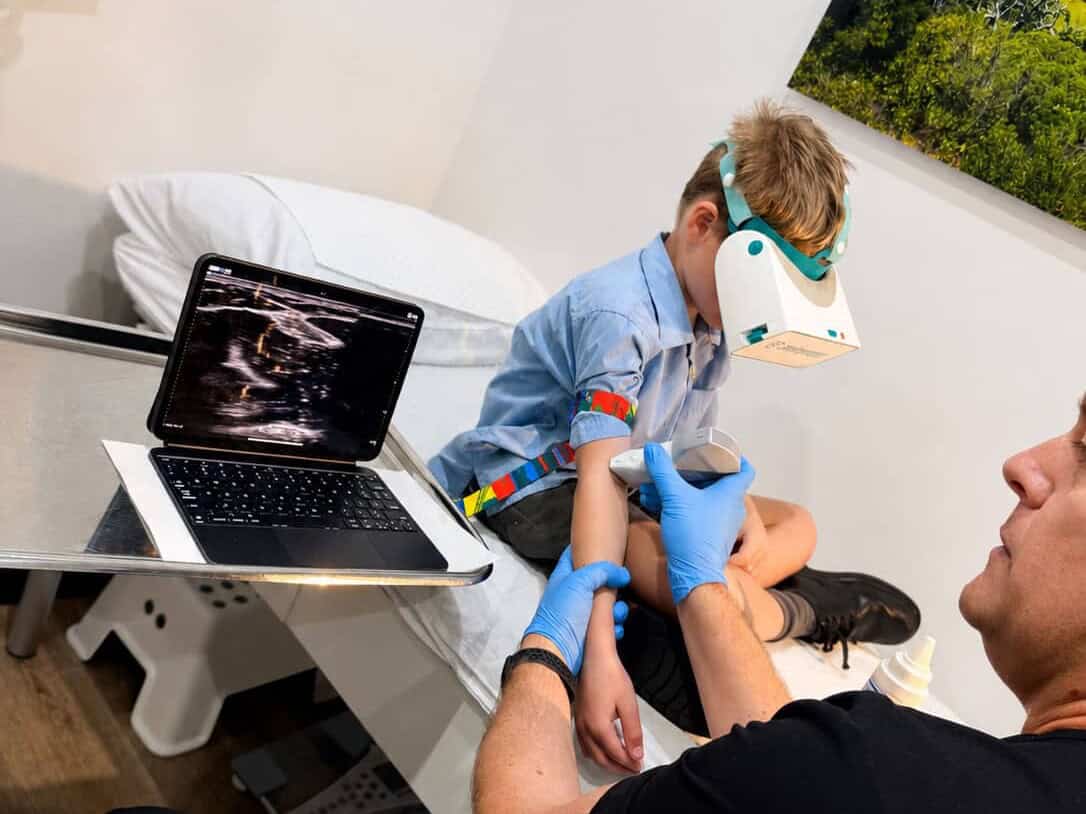
| Standard collection | Ultrasound-guided collection | |
|---|---|---|
| How the vein is found | By sight and touch | On an ultrasound screen, beneath the skin |
| Best suited to | Veins that are easy to see or feel | Veins that are small, deep, scarred or have failed before |
| Who performs it | Pathology collector | Dr Louis Traynor, Specialist Emergency Physician |
| Booking | Usually walk-in | Booked appointment, phone only |
| Where results go | The doctor who requested the test | The doctor who requested the test |
Please note: this is a blood collection service only. It is not a diagnostic ultrasound scan, and we can’t provide imaging reports through this clinic.
How to Book
Get Your Pathology Request Form
Your own GP or specialist orders the blood tests and gives you a pathology request form. The Difficult Venous Access Clinic can't issue request forms or order tests.
Call 02 9545 1777 to Book
Ask reception for a Difficult Venous Access Clinic appointment with Dr Louis Traynor. No referral is needed. This clinic can't be booked online, because appointments need to be made with Dr Traynor specifically.
Attend Your Appointment
Bring your request form and follow any fasting instructions on it. Dr Traynor will use ultrasound to find a suitable vein and collect your sample. Your results are then sent to the doctor who requested the tests, so please follow up with them.
Before Your Appointment
A few simple steps may help make your veins easier to find on the day:
- Drink water. Being well hydrated may help veins fill. Plain water is usually fine even before a fasting test, but always check the instructions on your request form.
- Keep warm. Wear a jumper or jacket, especially in cooler months. Warm arms and hands can help veins stand out.
- Wear loose sleeves that roll up easily above the elbow.
- Tell Dr Traynor what has worked before, such as a particular arm or site, and anything that hasn't.
- Bring your request form and your Medicare card.
Procedure Appointment Fees
All procedure appointments are privately billed.
Ultrasound-Guided Blood Collection
$95 on Saturdays, $105 on Sundays
- Appointment with Dr Louis Traynor
- Ultrasound-guided vein location
- Blood sample collection
- No referral needed
Advanced Techniques for Infants (Under 18 Months)
$140 on Saturdays, $150 on Sundays
- Appointment with Dr Louis Traynor
- Ultrasound probe guided vein location
- Blood sample collection
- No referral needed
Good to Know
This appointment fee covers Dr Traynor’s time and the ultrasound-guided collection. It is privately billed and is not covered by a Medicare rebate.
The pathology tests on your request form are processed and billed by the pathology laboratory, just as they would be at any collection centre.
About the Clinician
- FACEM
- Specialist Emergency Doctor
- Paediatric Emergency Medicine
- Ultrasound-Guided Vascular Access
Dr Louis Traynor is a Specialist Emergency Physician with dual training in adult and paediatric emergency medicine. He holds Fellowship of the Australasian College for Emergency Medicine (FACEM) and Fellowship in Paediatric Emergency Medicine through the Joint Training Committee with the Royal Australasian College of Physicians.
His background in emergency medicine means he often uses bedside ultrasound, a skill not commonly available in general practice, and he is skilled in ultrasound-guided vascular access. At Shire Family Medical he also founded and runs the BRAVE Clinic.
Dr Traynor is a Specialist Emergency Physician, not a GP. For ongoing care or to have blood tests ordered, please see your usual GP.

Common Questions
Frequently Asked Questions
It is a dedicated blood collection appointment for people whose veins are hard to find or have failed at previous blood tests. At Shire Family Medical in Sutherland, the clinic is run by Specialist Emergency Physician Dr Louis Traynor, who uses ultrasound to locate a suitable vein before collecting the sample.
No. You can call 02 9545 1777 to book directly. You will still need a pathology request form from the doctor who ordered your blood tests, as the clinic can’t order tests or issue request forms.
The standard appointment is $85 on weekdays, $95 on Saturdays, $105 on Sundays and is privately billed. The pathology tests on your request form are billed separately by the laboratory. Please confirm current fees when booking.
An ultrasound probe placed on the skin shows the veins underneath on a screen, including how deep and how large they are. This lets Dr Traynor choose a suitable vein and guide the needle to it, which can improve the chance of collecting blood with fewer attempts when veins can’t be seen or felt.
The ultrasound probe and gel are not painful. The needle is the same type used for a standard blood test, so most people find it feels similar. Where it helps, it may mean fewer needle attempts overall.
Drinking water beforehand and keeping your arms warm may help. Plain water is usually fine even before a fasting blood test, but always follow the instructions on your request form. Wear loose sleeves and let Dr Traynor know which sites have worked for you in the past.
If anxiety or needle phobia is part of the difficulty, the BRAVE Clinic is designed for you. It includes behavioural support and distraction techniques alongside ultrasound-guided access where needed. BRAVE requires a referral from your GP or paediatrician.
The Difficult Venous Access Clinic is for teenagers and adults. Children who need help with blood tests, including those with difficult veins, are seen through the BRAVE Clinic, which is set up specifically for younger patients
No. Ultrasound is used only to find a vein for your blood test. This clinic doesn’t provide diagnostic ultrasound scans or imaging reports.
No. The clinic is open to anyone with a valid pathology request form, including patients whose regular GP is elsewhere in the Sutherland Shire or Sydney.
No. Please call Shire Family Medical on 02 9545 1777, as appointments need to be booked with Dr Louis Traynor specifically.
Results are sent by the pathology laboratory to the doctor who requested your tests. Please follow up with that doctor to discuss them. The Difficult Venous Access Clinic doesn’t interpret or manage results.
Ready to Book the Difficult Venous Access Clinic?
Call our reception team to arrange your appointment with Dr Louis Traynor.
Health Articles
Understanding needle phobia and blood test anxiety, and how we help.

Needle Phobia in Children: How to Help Before, During and After Vaccinations
Trypanophobia (needle phobia) is common in children. Practical, GP-backed strategies from a Sutherland GP for calmer vaccination visits.

How Long Do Blood Test Results Take? Understanding What Happens Next
Most blood test results return within 1–2 business days. Here's what happens at the lab, how your GP reviews them, and when to expect…