

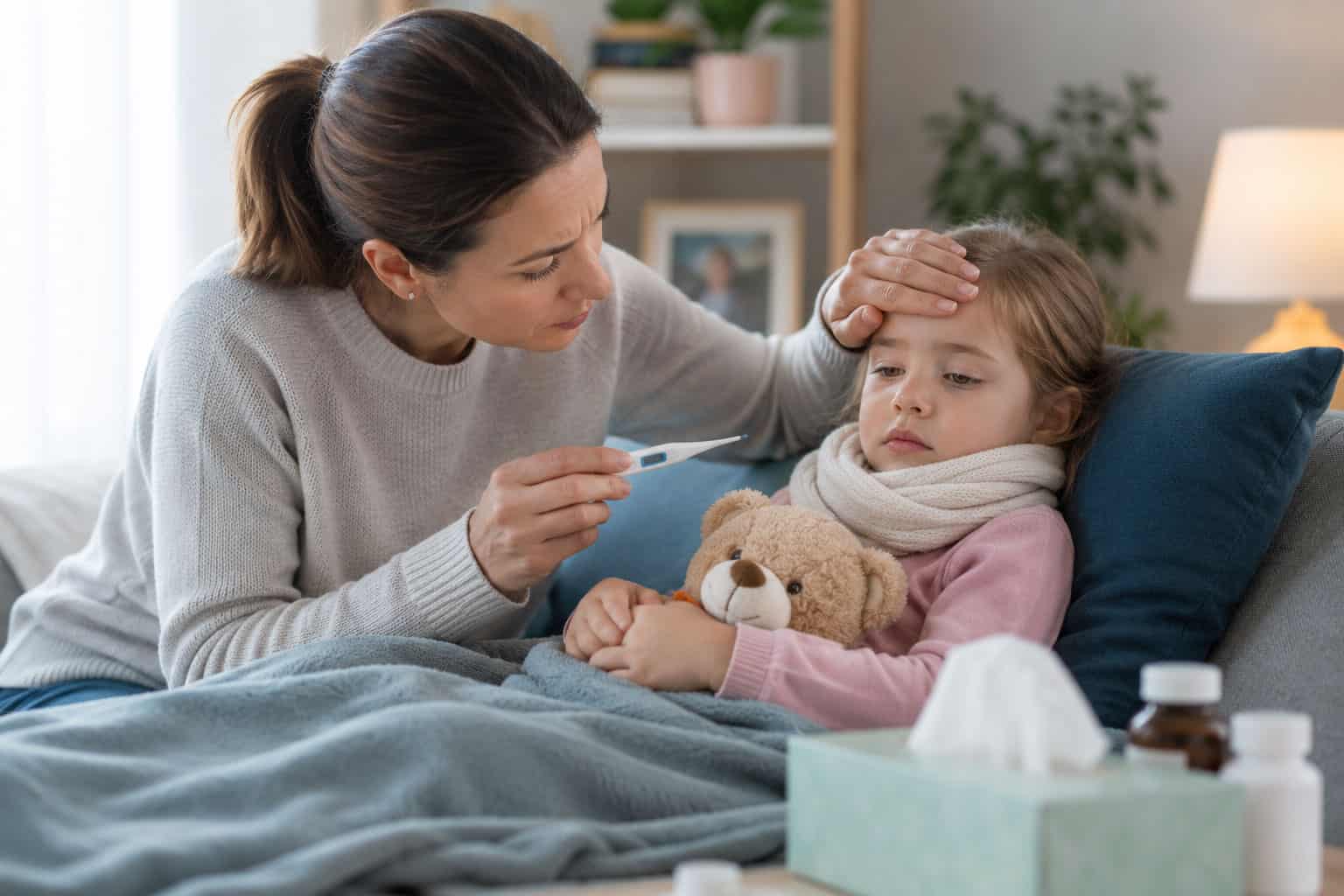
At Shire Family Medical, a GP medical centre in Sutherland, fever and cough are among the most common reasons parents bring a child in for assessment, and among the most anxiety-provoking.
Few things leave parents more uncertain than a child who is flushed, unsettled, coughing through the night or refusing food. One moment they seem tired but comfortable; the next, they are difficult to settle and clearly not themselves. Knowing whether to wait, book an appointment or seek urgent care is not always straightforward.
Shire Family Medical, a GP medical centre at 154 Flora Street, Sutherland, sees children of all ages for fever, cough, respiratory symptoms and common childhood illnesses. This article explains the fever temperature threshold parents need to know, the warning signs that need medical review, and how to decide what to do next.
Fever and Cough Are Very Common in Children
Coughs, colds and fevers are among the most frequent reasons children see a doctor, particularly during daycare, preschool and school years, when children are regularly exposed to new infections.
A fever is a sign that the body is responding to an infection. A cough may result from throat irritation, mucus draining from the nose, a viral infection, asthma, croup, bronchitis, pneumonia or other causes. Most childhood coughs and fevers are caused by viral infections and improve with time and supportive care. But some symptoms do need medical review sooner rather than later.
What Temperature Is a Fever in a Child?
A fever in a child is a body temperature of 38°C or higher, regardless of where or how it is measured.
This threshold is consistent across age groups, though how you act on it changes depending on how young your child is. A temperature above 40°C always warrants medical review. Any fever in a baby under three months old should be assessed urgently.
The number on the thermometer is not the only thing that matters. How your child looks, breathes, feeds, responds and behaves is often more clinically telling than the exact temperature reading. A child with 38.5°C who is alert, drinking and improving can usually be monitored at home. A child with a lower reading who is floppy, struggling to breathe or unusually drowsy may need prompt assessment.
- 38°C or higher: the clinical threshold for fever in children
- Above 40°C: always seek medical review
- Under 3 months with any fever: seek urgent care promptly
- Under 1 month with any fever: attend the nearest emergency department
A note on thermometers: underarm digital thermometers and ear (tympanic) thermometers are reliable ways to check a child’s temperature. Forehead infrared and plastic-strip thermometers can give inconsistent results and are not recommended when accuracy matters.
When a Fever Should Be Reviewed by a Doctor
A child’s fever needs prompt medical review when specific warning signs are present, particularly in very young babies and children who appear more unwell than would be expected from a straightforward viral illness.
Seek medical advice promptly if:
- Your baby is under three months old and has a temperature of 38°C or higher
- Your child has a fever lasting more than two days
- Your child seems to be getting more unwell rather than improving
- Your child has a weakened immune system or a complex medical condition
- Your child has a fever above 40°C
- Your child has had a febrile convulsion (a seizure triggered by fever)
- Your child has a stiff neck, sensitivity to light or a severe headache alongside fever
- Your child has a bulging fontanelle (the soft spot on a baby’s head)
- Your child is vomiting and unable to keep fluids down
- Your child has a rash, especially one that does not fade when pressed with a glass or finger
- Your child is unusually sleepy, confused, floppy or difficult to wake
- Your child is breathing faster than normal or seems to be working hard to breathe
- A child who usually walks has stopped and seems unable to walk
Trust your judgement. You know your child. If they look very different from their usual self, or something feels wrong even if none of the above apply, seeking medical advice is reasonable.
When a Cough Should Be Reviewed
A child’s cough needs GP assessment when it is affecting breathing, feeding, sleep or normal activity, or when it is worsening, not improving after a week or so, or accompanied by a fever that is not settling.
Coughs can linger for a week or two after a viral illness, and this is normal. However, some coughs need assessment, particularly when breathing, feeding or energy are affected.
Book a GP appointment if your child has:
- A cough with fever that is not improving
- A cough that is getting progressively worse
- Wheezing, noisy breathing or shortness of breath
- A cough affecting sleep, feeding or day-to-day activity
- Repeated vomiting after coughing episodes
- Chest pain or significant discomfort
- A persistent cough lasting more than three to four weeks
- A history of asthma, prematurity, heart or lung conditions
- A barking, seal-like cough with a hoarse voice, which may suggest croup
A GP can examine your child’s chest, assess breathing, listen for wheeze or crackles, check hydration and decide whether testing, medication, observation or a referral is needed.
When To Seek Urgent Care
Some symptoms in children with fever or cough require urgent care: call 000 or go to the nearest emergency department immediately, without waiting for a GP appointment.
Seek urgent care if your child:
- Is struggling to breathe, or breathing very fast
- Has blue, grey or very pale lips, face or skin
- Is drowsy, floppy, confused or not responding normally
- Has a rash that does not fade when pressed
- Has a seizure or convulsion: call 000 immediately if it is their first seizure, lasts more than five minutes, or they do not wake up afterwards
- Has signs of severe dehydration (no wet nappies, very dry mouth, sunken eyes)
- Has a stiff neck, light sensitivity or severe headache with fever
- Has a bulging fontanelle (soft spot) as a young baby
- Becomes very unwell very quickly
If you are unsure whether symptoms are urgent, it is always safer to seek advice. The healthdirect helpline (1800 022 222) connects you with a registered nurse 24 hours a day, seven days a week.
What Your GP May Check
When you bring your child to a GP with a fever or cough, the doctor will assess a combination of clinical signs and your child’s history to understand what is causing the illness and whether treatment or further investigation is needed.
Your GP will ask when symptoms started, how high the temperature has been, whether your child is drinking and urinating normally, and whether other symptoms are present (such as rash, ear pain, wheeze, vomiting, diarrhoea, sore throat or breathing difficulty).
They may check:
- Temperature, breathing rate and general appearance
- Hydration and alertness
- Throat, ears and lymph nodes
- Chest sounds and breathing effort
- Skin and any rash present
- Whether asthma, croup, pneumonia, an ear infection, a urinary tract infection or another condition may be involved
Shire Family Medical’s Paediatrics service supports infants, children and adolescents with common childhood illness management, including fevers, coughs, respiratory infections, rashes and asthma reviews.
Cold and Flu Symptoms in Children
If your child has a cough, runny nose, sore throat, fever or shortness of breath, they may need a dedicated unwell appointment rather than a standard booking, to ensure they are assessed appropriately and that other patients are not put at risk.
Shire Family Medical’s Unwell Clinic provides priority GP appointments for patients with cold and flu-like symptoms. When booking, let reception know if your child seems very unwell, is having difficulty breathing, is not keeping fluids down, or has symptoms that are worsening quickly. This helps the team triage appropriately.
Does Teething Cause Fever?
Teething does not cause a true fever. Children who are teething may have a slightly elevated temperature, but clinical evidence does not support teething as a cause of a body temperature reaching 38°C or higher.
A teething child with a temperature of 38°C or more almost certainly has a coincidental infection: both teething and childhood infections are very common at the same ages, so the two often occur together. Treat the fever as you would any other: monitor closely, and seek GP review if your child is under three months old, has a fever lasting more than two days, or seems more unwell than expected.
Home Care for Fever
Most fevers in children can be managed at home when symptoms are mild and your child is drinking, alert and showing signs of improving.
The goal is not always to return the temperature to normal. The goal is to keep your child comfortable and watch for signs that the illness is changing. It is also worth knowing that lowering a fever with paracetamol or ibuprofen does not prevent febrile seizures: the value of fever medicine is to reduce discomfort.
Helpful steps include:
- Offer small, frequent drinks: water, diluted juice or oral rehydration fluid
- Allow your child to rest
- Dress them comfortably and avoid overheating
- Use paracetamol or ibuprofen only as directed for your child’s age and weight, ibuprofen is only suitable for children three months of age or older
- Do not give aspirin to children
- Avoid cold baths or showers
- Monitor breathing, alertness, hydration and whether symptoms are improving or worsening
A child who is alert, drinking and otherwise comfortable may not need fever medicine just because the thermometer shows a temperature. A child who is miserable, in discomfort or not settling may benefit from it.
Home Care for Cough
Many viral coughs improve with time, rest and fluids: antibiotics do not treat viral infections such as the common cold, and over-the-counter cough medicines are not routinely recommended for young children.
Supportive care for cough may include:
- Plenty of fluids and rest
- Gentle nose clearing, particularly for young children who cannot blow their nose
- Avoiding smoke or vaping exposure
- Keeping your child comfortable at home
If your child has asthma or has been prescribed inhalers, follow their asthma action plan and seek medical advice if symptoms are not settling or are worsening.
What To Tell the GP
Bringing a brief note (or a few points saved on your phone) can make the appointment more useful, especially when you are tired and worried.
Useful information includes:
- When the fever or cough started
- The highest temperature recorded and how it was measured
- Whether your child is drinking and urinating normally
- Whether there is wheeze, fast breathing or shortness of breath
- Whether symptoms are improving, stable or worsening
- Any vomiting, diarrhoea, rash, ear pain, sore throat or chest pain
- Any known exposure to flu, COVID-19, RSV, whooping cough or other infections
- Any asthma history, allergies, medications or medical conditions
- Whether vaccinations are up to date
If your child is due for routine vaccines or has missed doses, Shire Family Medical’s Children’s Immunisations & Vaccinations service can assist with scheduled vaccines, catch-up plans and Australian Immunisation Register reporting.
When To Keep Your Child Home
Children with fever, significant cough, vomiting, diarrhoea or symptoms that make them too unwell to participate should generally stay home from childcare, preschool, school or activities until they are well enough to return.
Keeping children home when unwell helps them rest and reduces the spread of infection to babies, older people, pregnant people and those with weakened immune systems who may be more vulnerable. Your GP can advise on return-to-care or return-to-school timing based on the specific illness.
Helping Your Child Feel Less Worried
Sick children can feel frightened by appointments, thermometers, swabs, chest examinations or the idea of medicine. Calm, honest preparation helps.
You might say simply: “The doctor will listen to your chest and help us understand why you have a temperature and why your cough is bothering you.”
For children who are nervous about medical visits or procedures, our article on preparing children for healthcare visits and vaccinations covers practical strategies using calm language, comfort and distraction.
Knowing When To Act
Fever and cough are common in children, but they still deserve careful attention. The most telling clues are often how your child is breathing, drinking, responding and behaving compared with their usual self.
If your baby is very young, your child seems very unwell, breathing is laboured, dehydration is developing or symptoms are worsening, seek medical advice promptly. For severe or rapidly changing symptoms, call 000 or attend the nearest emergency department.
For children in Sutherland and across the Sutherland Shire with fever, cough or cold and flu symptoms, book an Unwell Clinic appointment → for priority GP assessment when your child needs to be seen.
Frequently Asked Questions
What temperature is a fever in a child?
A fever in a child is a body temperature of 38°C or higher. This threshold applies regardless of how or where the temperature is measured. A temperature above 40°C always warrants medical review. Any fever in a baby under three months old should be assessed urgently, and a baby under one month old with any fever should be taken to the nearest emergency department immediately.
Is 38°C a fever in a child?
Yes. A body temperature of 38°C or higher is the clinical threshold for fever in children. The exact temperature reading matters, but so does how your child appears. A child with a slightly elevated reading who is alert and drinking may be monitored at home. A child with a lower reading who is floppy, struggling to breathe or unusually drowsy may need more urgent review.
Does teething cause fever in children?
Teething does not cause a true fever. Teething children may have a mildly elevated temperature, but clinical evidence does not support teething as a cause of a temperature reaching 38°C or higher. A teething child with a fever of 38°C or more most likely has a coincidental infection and should be assessed by a GP in the same way as any other childhood fever.
When should I take my child to the GP for a fever?
Take your child to the GP if they are under three months old with a fever of 38°C or higher, the fever has lasted more than two days, they seem to be getting more unwell, they are not keeping fluids down, or they have breathing difficulties. For severe symptoms (difficulty breathing, blue lips, a seizure, or a rash that does not fade when pressed), call 000 or attend the nearest emergency department.
When is a child’s cough concerning?
A child’s cough should be reviewed by a GP if it is worsening, affecting breathing, feeding, sleep or daily activity, causing repeated vomiting after coughing, or accompanied by fever that is not improving. A barking cough with a hoarse voice may suggest croup and should be assessed. A cough lasting more than three to four weeks without improvement also warrants review.
When should I seek urgent care for a child with fever or cough?
Seek urgent care immediately (call 000 or go to the nearest emergency department) if your child is struggling to breathe, has blue, grey or pale lips or skin, is unusually drowsy or not responding normally, has a rash that does not fade when pressed, has a seizure, or becomes very unwell very quickly. Do not wait for a GP appointment for these symptoms.
Can I give paracetamol and ibuprofen together for a child’s fever?
It is generally safe to give both paracetamol and ibuprofen at the same time, or to alternate them according to the instructions on the packaging, if your child is miserable and one medicine alone is not providing enough relief. Ibuprofen is only suitable for children three months of age or older. Always follow the dosing instructions for your child’s age and weight, and never give aspirin to children. If you are unsure, speak with your GP or pharmacist.
Are antibiotics needed for a child’s cough?
Not always. Many childhood coughs are caused by viral infections, and antibiotics do not treat viruses. A GP can assess whether another cause (such as a bacterial infection, pneumonia or an underlying condition like asthma) needs treatment, or whether supportive care is the most appropriate approach for your child’s specific illness.
This article provides general health information only. It is not a substitute for personalised medical advice and does not create a doctor-patient relationship. Any treatment, test, procedure or vaccination mentioned is for illustrative purposes only. Suitability depends on individual circumstances and assessment by a qualified health professional. Medical information can change; always speak with your GP about your specific symptoms, health history and care options. In an emergency, call 000.
About Shire Family Medical
Shire Family Medical is an AGPAL-accredited general practice in Sutherland, providing patient-centred GP care for individuals and families at every stage of life. Led by Dr Louis Traynor and registered nurse Rebel Traynor, the practice offers a broad range of general practice services at 154 Flora Street, Sutherland — conveniently located near Sutherland Station and serving the wider Sutherland Shire community. All doctors practising at Shire Family Medical are registered medical practitioners with the Australian Health Practitioner Regulation Agency (AHPRA).
Shire Family Medical publishes general health information across preventive care, women’s and men’s health, children’s health, travel health and chronic disease management. Articles are written to help patients make informed decisions about their health in partnership with their GP.